
Load profile
Maximum weight, dimensions, center of gravity, packaging and handling sensitivity.
Intralogistics solutions
Shrusti plans material movement, storage, loading, lifting and handling as one operating system - from site study and layout development to equipment supply, commissioning and lifecycle support.
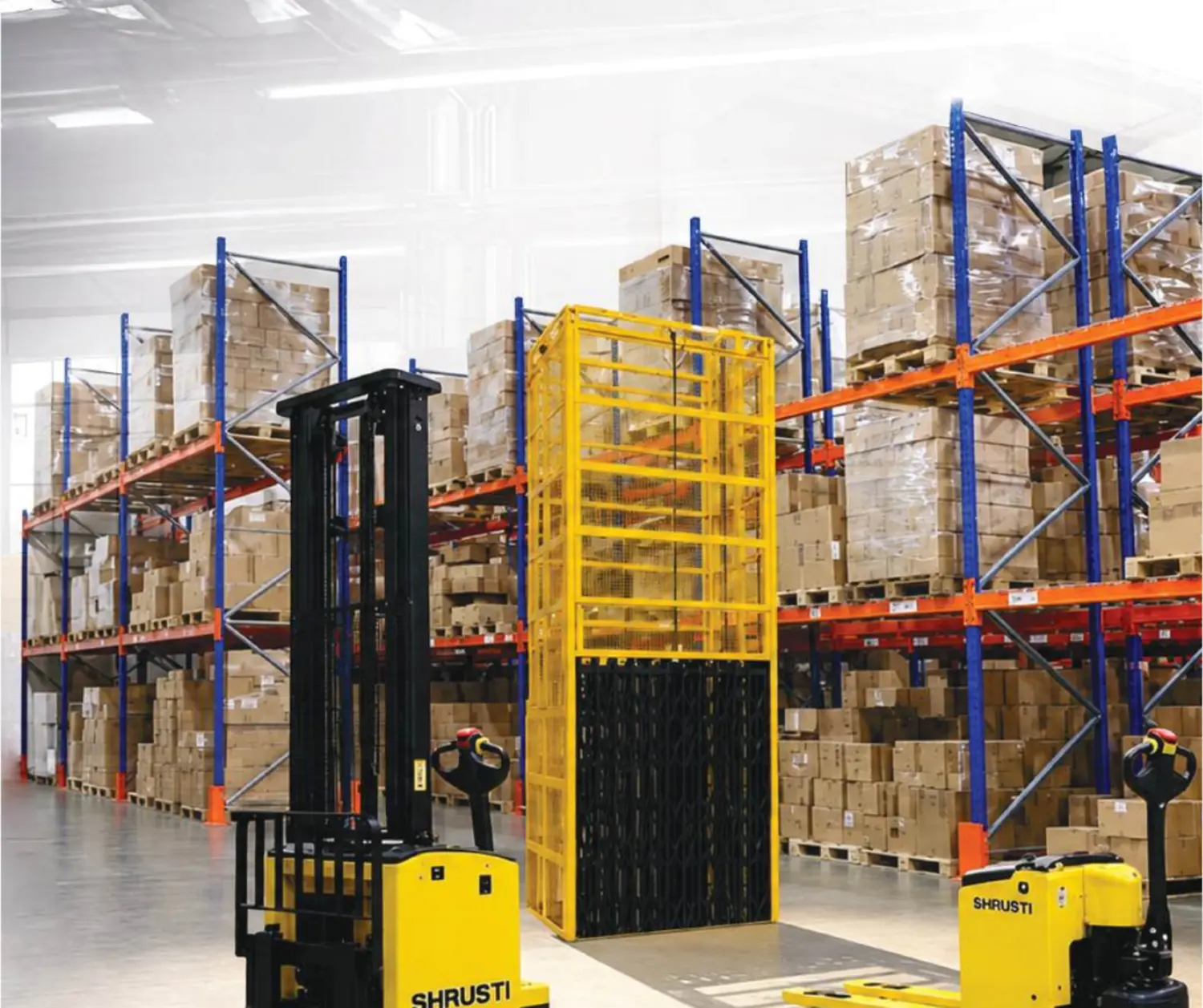
A practical definition
It connects where materials arrive, how they are stored, which equipment moves them, how often they are handled, how they reach production or picking, and how they leave the facility.
Shrusti starts with the operation rather than a predetermined product. The objective is to reduce avoidable travel and handling, use available space more effectively, improve safety at transfer points and select equipment that fits the actual duty.
Start with the operating problem
Select the constraint that best describes the current operation. The recommendation panel shows the consulting and equipment pathways that normally need to be reviewed together.
What we study
Layouts alone do not explain how a facility works. Shrusti combines physical dimensions with material, movement and frequency data to understand the complete requirement.
Share available inputsMaximum weight, dimensions, center of gravity, packaging and handling sensitivity.
Inventory mix, pallet types, stock quantity, turnover and access pattern.
Where loads start, stop, queue, change level or transfer between equipment.
Movements per shift, peak periods, travel distance and expected duty cycle.
Floor area, clear height, columns, doors, pits, docks, slopes and access constraints.
Operator interaction, pedestrian routes, visibility, guarding and transfer interfaces.
Existing trucks, lifts, racks, storage systems, condition and compatibility.
Expected volume, SKU growth, expansion phases and operational flexibility.
Consulting services
Choose a focused study for one operating area or combine the services into a complete facility review.
Discuss the consulting scopeObserve receiving, storage, production support, loading and dispatch to define the current operating condition.
Trace how materials move, where they wait and how often they are handled between arrival and dispatch.
Balance storage density, direct access, stock rotation, handling method and available clear height.
Match manual and powered equipment to load, distance, lift height, frequency, aisle and operator needs.
Review vehicle mix, dock height, yard conditions, staging, transfer equipment and internal routes.
Plan movement between levels and the handling of drums, long materials, dies, coils or non-standard loads.
Convert the selected concept into phases, equipment schedules, site dependencies and budgetary scope.
Plan around existing structures, live operations, shutdown windows and installed equipment.
Tangible study outputs
Deliverables are selected around the scope and project stage. A focused study may address one issue; a complete review can create the foundation for supply and execution.
Request a study scopeMovement routes, queues, transfer points and repeated handling steps.
Practical options compared against capacity, access and execution constraints.
Rack, shelf or storage configuration aligned to stock profile and access needs.
Recommended equipment classes, capacities, lift heights and operating roles.
Loading, vertical movement, pedestrian and equipment interaction points.
Priorities, dependencies, execution sequence and budgetary procurement scope.
Integrated material flow
Select a stage to see the equipment, storage and engineering decisions that influence it.
From plan to equipment
Shrusti supports standard products, engineered systems, storage infrastructure and site execution within one coordinated material-flow plan.
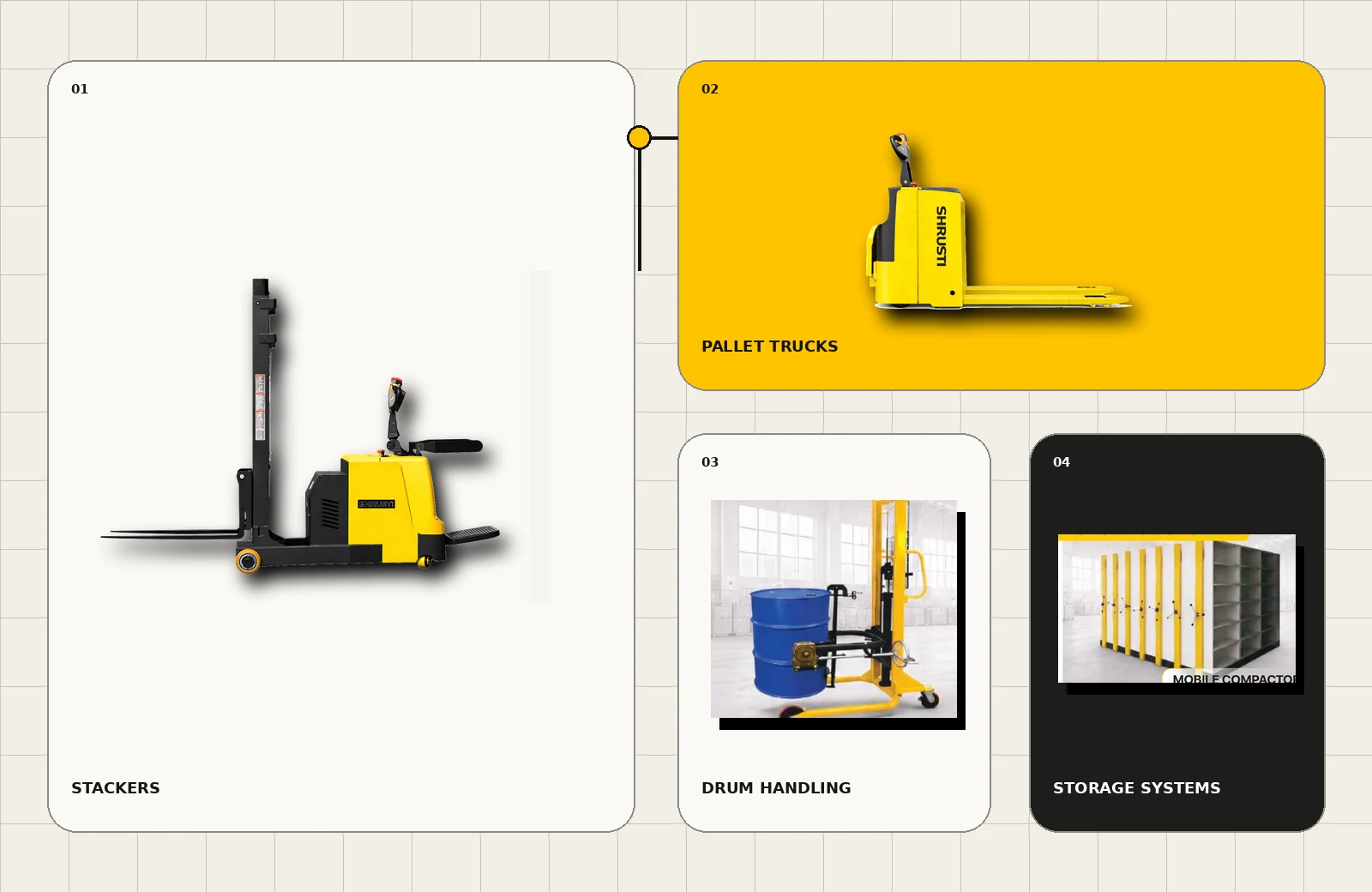
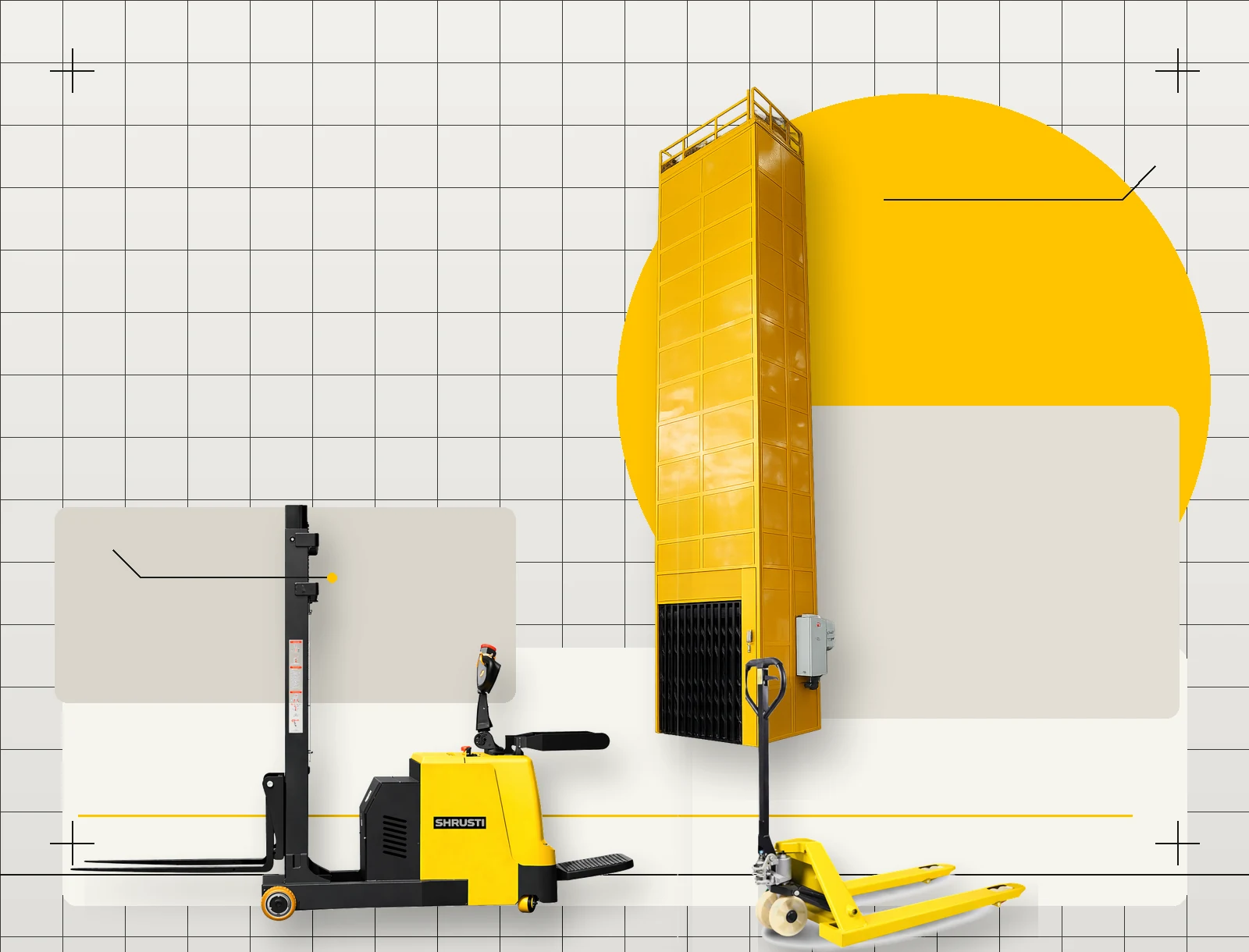
Stackers, pallet trucks, drum handling and selected storage products with defined configurations.
View standard products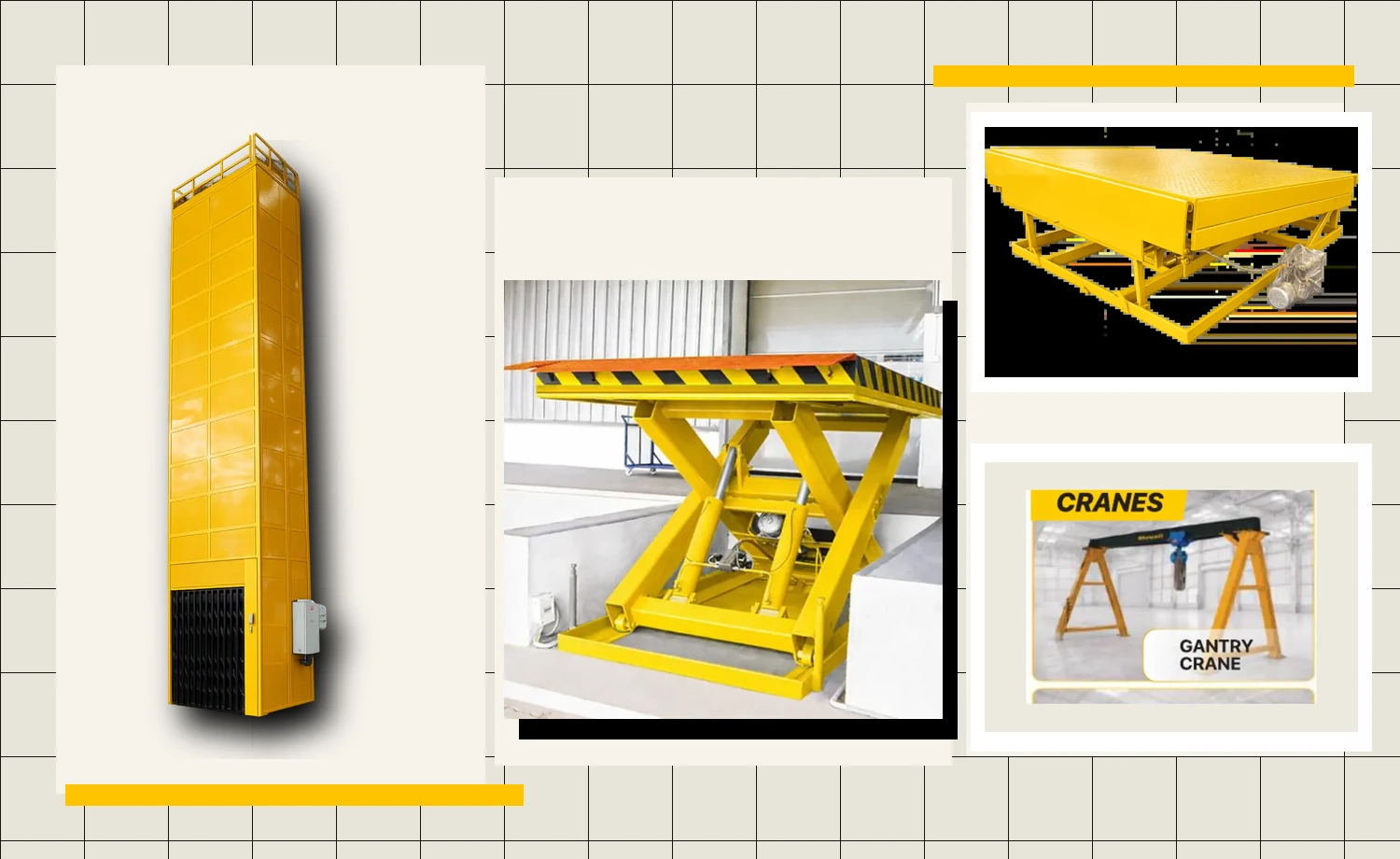
Quote-led systems selected around capacity, dimensions, site structure and operating duty.
View engineered products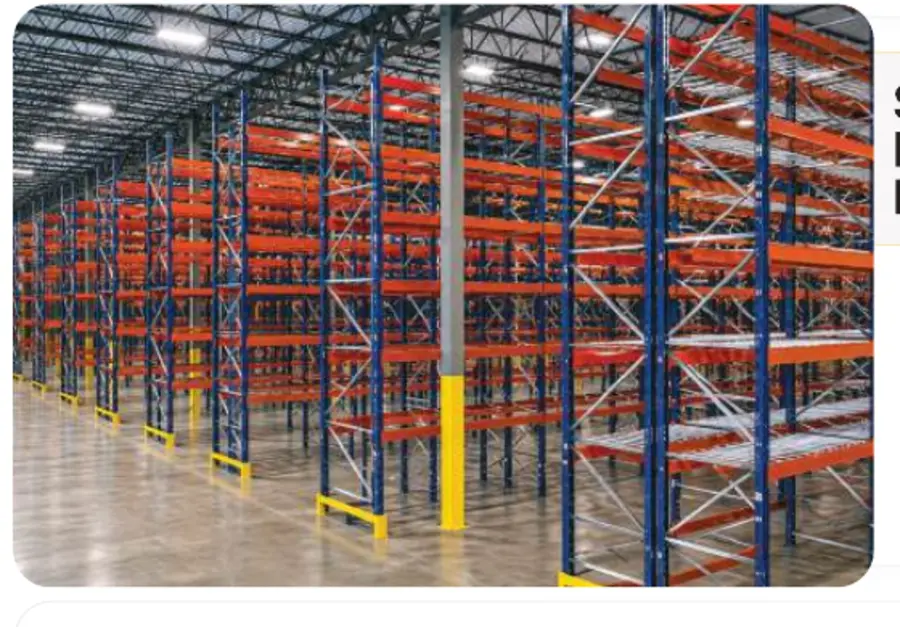
Balance density, access, stock rotation and handling method around the inventory profile.
Explore storage and racking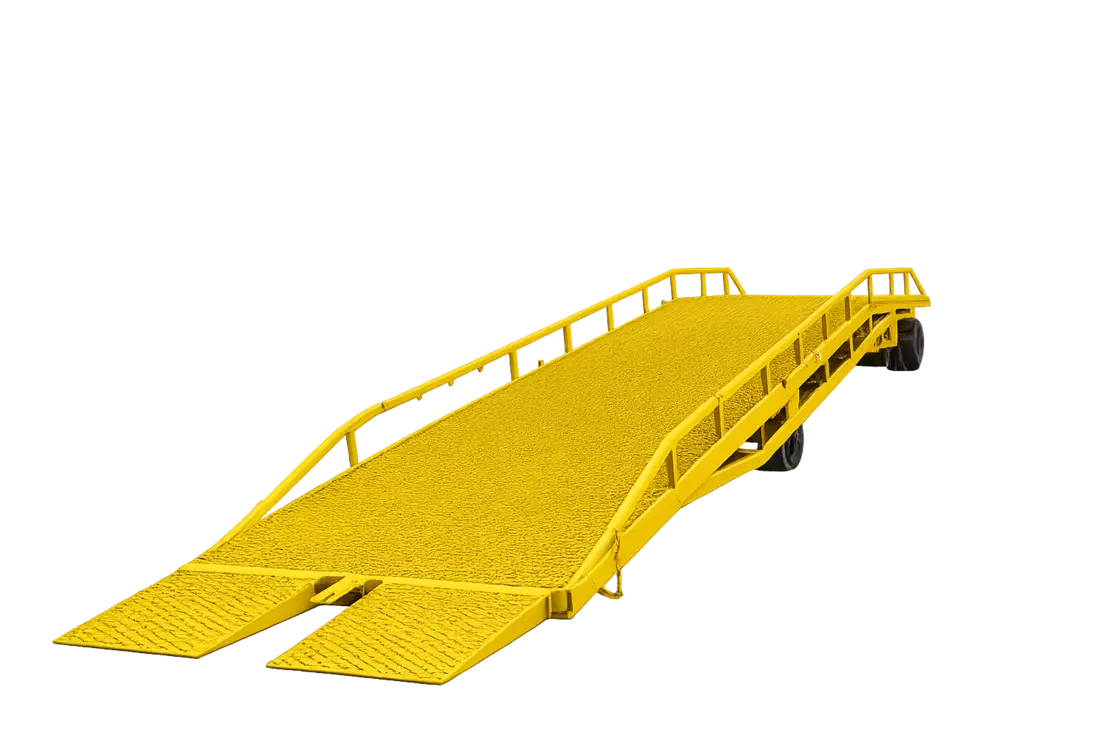
Coordinate detailed engineering, supply, site work, testing, handover and ongoing support.
See the delivery processSolution pathways
Start with the scope that matches the current decision. The engagement can remain focused or expand into complete execution.
Capacity model, layout, movement routes, storage, equipment schedule and implementation phases.
Current-state study, constraint review, compatibility checks and execution around live operations.
Inventory analysis, density options, aisle planning, equipment compatibility and future expansion.
Vehicle mix, dock or ramp selection, staging, pallet movement and receiving/dispatch routes.
Movement frequency, working height, point-of-use storage, pallet or drum handling and lifting.
Condition review, repair scope, relocation planning, expansion, operator support and AMC.
Outcomes we design for
Targets and measurement methods are defined during the study. The page does not promise a percentage before the baseline and operating data are understood.
More usable storage or operating capacity within the available facility envelope.
Measure: positions, volume, floor area and accessReduce unnecessary transfers, staging and repeated lifting between process stages.
Measure: touches per load and queue pointsPlace storage, equipment and work zones around the actual material path.
Measure: route distance and travel timeImprove operator access, visibility, transfer heights and separation at critical points.
Measure: identified risks and control actionsMatch capacity, lift height, travel mode and quantity to the actual operating duty.
Measure: utilization, cycle demand and suitabilityAllow the layout and equipment plan to grow in defined phases as demand changes.
Measure: expansion capacity and implementation stagesIndustries
The same product can play a different role depending on load type, movement frequency, storage pattern and operating environment.
Raw material, WIP, line-side supply and finished-goods movement.
Components, kitting, sequencing, tooling and high-frequency replenishment.
Heavy parts, machines, dies, maintenance and special lifting requirements.
High-volume pallet flow, stock rotation, replenishment and dispatch.
Cartons, mixed SKUs, back-room storage and store replenishment.
Picking access, order staging, returns and rapid dispatch flow.
Controlled stock movement, traceable zones and disciplined rotation.
Ingredients, packaging, production supply and finished-goods handling.
Rolls, bales, cartons, production staging and finished-goods storage.
Drums, containers, segregation, controlled movement and special handling.
Changing clients, pallet profiles, staging, receiving and dispatch demands.
Space density, stock rotation, aisle access and equipment suitability.
Representative applications
These profiles show how the scope is structured. They are not published customer case studies or performance claims.
Challenge: Growth has reduced aisle clarity and created ground stacking.
Study: Inventory profile, clear height, access frequency, storage options and equipment compatibility.
Output: Phased rack layout, capacity comparison, aisle plan and equipment schedule.
Discuss a similar requirement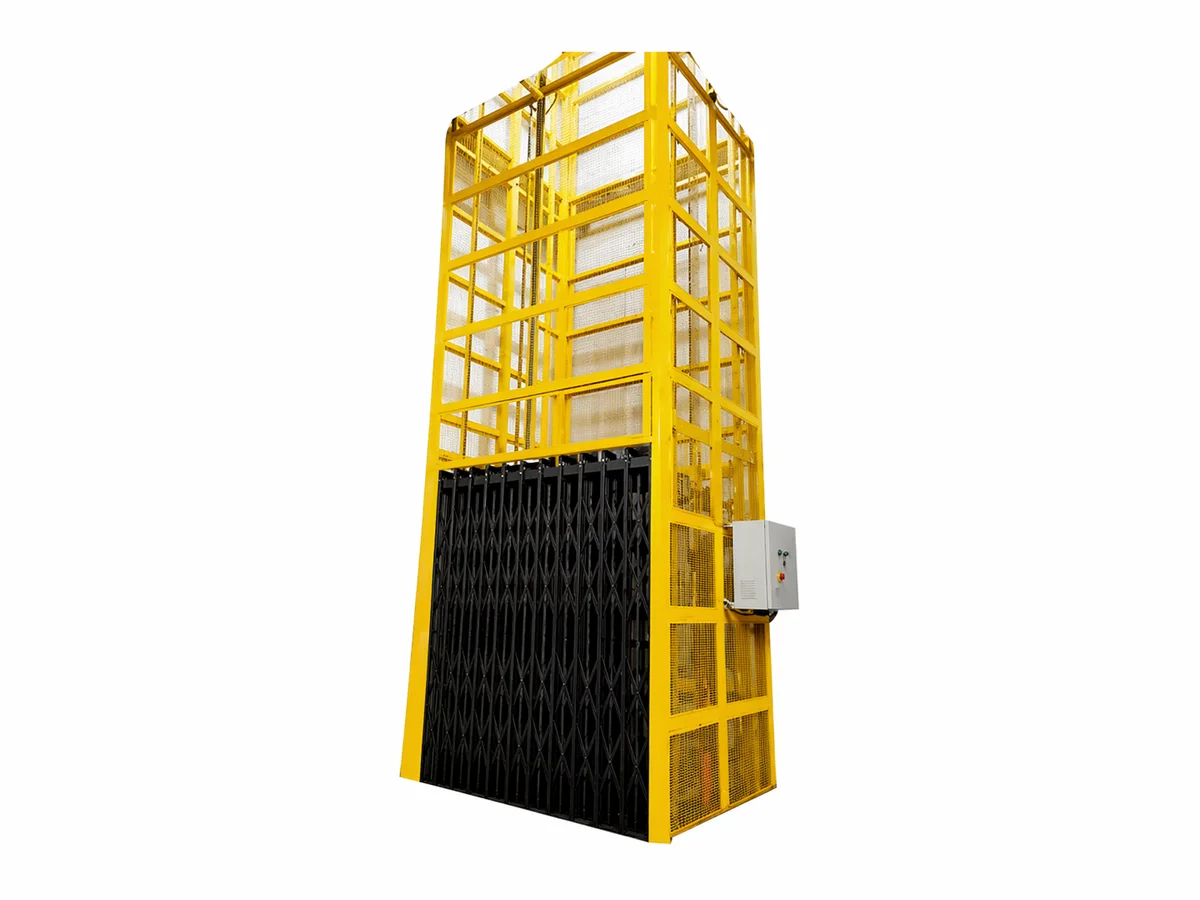
Challenge: Loads move between production and storage levels using an inefficient route.
Study: Load, travel, platform, access, stops, frequency and structural interface.
Output: Vertical movement concept, equipment requirement and site dependencies.
Discuss a similar requirementChallenge: Vehicle height variation and limited staging create delays at the transfer point.
Study: Vehicle mix, yard, dock, load, forklift or pallet-truck movement and internal route.
Output: Interface recommendation, staging plan and movement sequence.
Discuss a similar requirementHow Shrusti works
One coordinated process reduces handoffs between consultant, supplier, installer and service provider.
Site review, stakeholder inputs, layout, load data, movement routes and baseline constraints.
Layout alternatives, storage, equipment selection, capacity checks and implementation logic.
Detailed engineering, manufacturing, sourcing, project planning and site readiness.
Site execution, alignment, load testing, documentation, training and operational handover.
AMC, preventive maintenance, spares support, operator guidance and future expansion review.
Why Shrusti
Shrusti combines four decades of material handling experience with a broad product portfolio and project-delivery capability.
Recommendations start with load, route, space, frequency and operating conditions.
Standard equipment, storage and engineered systems can be connected to the selected plan.
Detailed engineering, supply, installation, testing and handover can remain under one accountable team.
AMC, preventive maintenance, spares and upgrade support continue after commissioning.
Lifecycle support
Facilities evolve. Product mix, volume, staffing and layouts change over time. Shrusti can review the installed equipment and infrastructure, identify maintenance or expansion needs and plan the next phase.
Frequently asked questions
Answers to the practical questions that usually come before a site review or proposal.
Ask a specific questionIntralogistics is the planning and coordination of material movement, storage, loading, lifting and handling inside an industrial facility. Shrusti connects these activities into one practical operating plan rather than treating each product as an isolated purchase.
A study is useful when storage is congested, travel routes are long, handling steps are repeated, loading is slow, safety interfaces need improvement, equipment selection is unclear, or a facility is being built, expanded or reorganized.
Useful starting inputs include a facility layout, material or SKU profile, pallet and load dimensions, maximum weights, storage quantities, movement frequency, operating shifts, clear heights, dock or yard information and current equipment. The study can begin with partial information and identify what else is needed.
Yes. Brownfield work can be planned around existing structures, access routes, installed equipment and operating windows. Recommendations can be phased so that the most practical improvements are implemented first.
The decision considers load, travel distance, lift height, handling frequency, aisle width, floor condition, operator effort and shift pattern. A manual product may be the right choice for occasional work, while powered equipment is more suitable when repeated movement or travel drives fatigue and cycle time.
Selection is based on inventory profile, pallet or item dimensions, load, stock quantity, turnover, access frequency, rotation method, clear height, aisle needs and material-handling equipment. The goal is to balance density with practical access.
Yes. The study can continue into standard equipment supply, engineered systems, racking, installation, commissioning and lifecycle support. The exact execution scope is defined in the proposal.
Yes. Uploading a facility layout, tender document, load photograph or image of current equipment helps the team prepare a more specific initial discussion.
The duration depends on facility size, data availability and whether the scope covers one operating area or the complete site. The study plan and expected deliverables are confirmed after the initial discussion.
Yes. Shrusti supports installed equipment and systems through AMC, preventive maintenance, spares, operator guidance and future expansion or upgrade reviews, subject to the agreed service scope and location.
Start the study
Tell us what is moving, where it needs to go and what is limiting the current operation. Attach a layout or photographs when available.