Established 1985 in ChennaiDesign • Manufacture • Install • Commission • Support

Shrusti Conventional Pallet Racking

Pallet Racking

Quote-led storage system • Storage study recommended

Shrusti Conventional Pallet Racking

Shrusti Conventional Pallet Racking is a selective pallet storage solution for wide SKU range needing full access. It provides every pallet (100%) with medium storage density and is planned around forklift / reach truck.

DensityMediumAccessEvery pallet (100%)HandlingForklift / reach truck

Product overview

Selective pallet storage for wide SKU range needing full access.

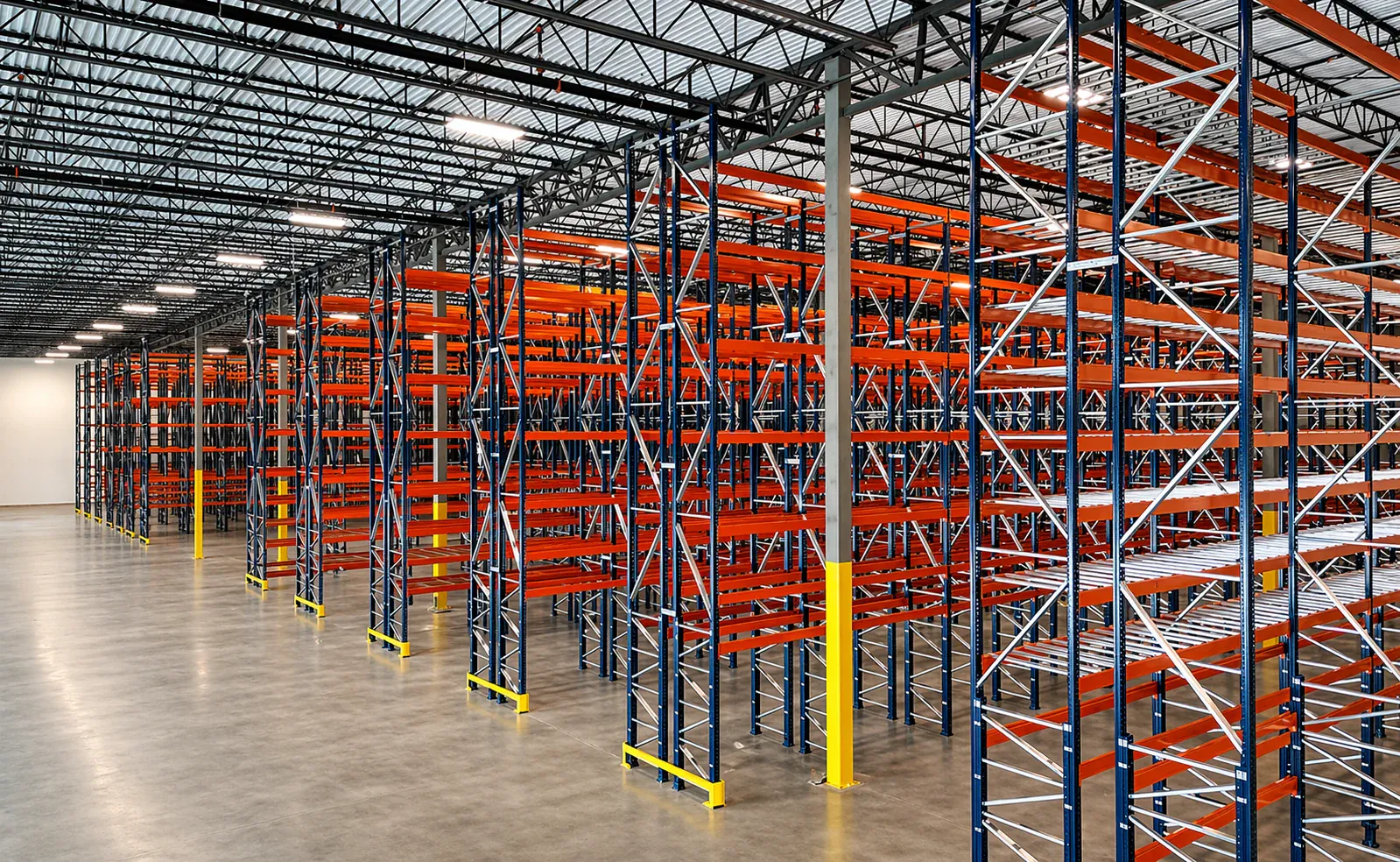
Shrusti Conventional Pallet Racking is designed for wide SKU range needing full access. Steel upright frames and adjustable load beams create pallet bays that open directly to the operating aisle. Wall-side rows can be single-entry, while central rows can be arranged back-to-back for access from both sides. The system balances medium storage density with every pallet (100%) and uses operator-managed, any sequence stock flow. Selection starts with the confirmed load unit, inventory profile, available height, floor layout and handling method. Final structural ratings, dimensions and accessories are stated in the Shrusti quotation and approved layout.

How it works

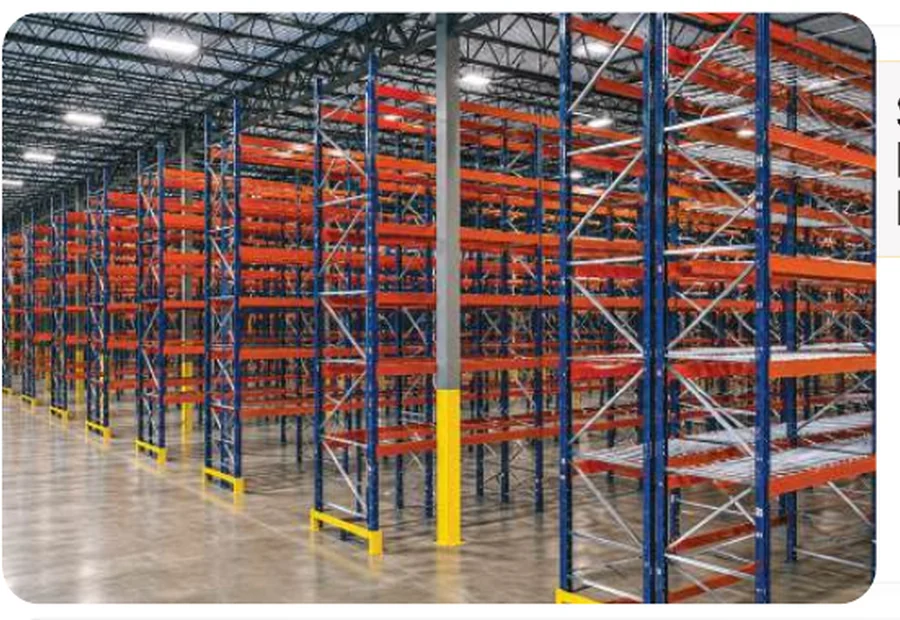
Steel upright frames and adjustable load beams create pallet bays that open directly to the operating aisle. Wall-side rows can be single-entry, while central rows can be arranged back-to-back for access from both sides.

Key features

  • Single-entry and double-entry bays
  • Storage density: Medium
  • Storage access: Every pallet (100%)
  • Stock rotation: Operator-managed, any sequence
  • Handling method: Forklift / reach truck
  • Load profile: Palletised goods, medium–high load
  • Modular rows, bays and beam levels can be extended or reconfigured as inventory profiles change.
  • Direct, single-pallet access from the aisle to every stored load, with no need to move other pallets to reach a given SKU
  • Modular upright-and-beam construction that can be reconfigured as pallet types or storage needs change

Benefits

  • Space utilisation: Medium density for the documented inventory profile.
  • Accessibility: Every pallet (100%).
  • Inventory flow: Operator-managed, any sequence.
  • Operational fit: Designed for wide SKU range needing full access.
  • Handling compatibility: Planned around forklift / reach truck.
  • Expansion: Modular rows, bays and beam levels can be extended or reconfigured as inventory profiles change.
  • Safety: Confirm aisle width, pallet overhang, beam locking, anchors, rack protection and load signage for the selected forklift or reach truck.
  • Space utilization: Combines wall-side single-entry and centre-aisle double-entry bays to use both perimeter and central floor area
  • Accessibility: Every pallet position is reachable directly from the aisle without repositioning other loads
  • Inventory control: One SKU per bay position supports clear location coding and stock rotation by pallet

Technical specifications

Published configuration framework.

Only product information supported by the catalogue is shown. Final dimensions and structural ratings are stated in the approved quotation and layout.

Conventional Pallet Racking technical specifications
Product familyPallet Racking
Storage typeSelective pallet storage
Load capacityProject-specific; final load capacity is stated in the approved structural layout.
Bay configurationSingle-entry and double-entry bays
Storage depthSingle pallet deep on each aisle face
Frame / structure heightProject-specific; final frame height follows the approved facility layout.
Beam / shelf / tier levelsAdjustable or project-specific levels based on the load and inventory profile.
Bay widthSized to the confirmed load unit and handling method in the approved layout.
Bay depthDefined by the storage method and load geometry in the approved layout.
Shelf load capacityNot applicable as a shelf rating; pallet position loads are project-specific.
Bay load capacityProject-specific; stated in the approved structural design.
Upright / structural sectionSelected to the confirmed load, height and bay arrangement in the structural design.
Material constructionSteel structural components are used; grade and section are confirmed in the technical offer.
Coating / finishFinish is selected in the quotation for the operating environment.
Storage accessibilityEvery pallet (100%)
Storage densityMedium
Stock rotationOperator-managed, any sequence
Handling methodForklift / reach truck
Expansion capabilityModular rows, bays and beam levels can be extended or reconfigured as inventory profiles change.
Safety provisionsConfirm aisle width, pallet overhang, beam locking, anchors, rack protection and load signage for the selected forklift or reach truck.
Suitable load unitsPalletised goods, medium–high load
Facility compatibilityWide SKU range needing full access
Customization optionsBay height, beam spacing, row length, single- or double-entry layout and pallet-support details.

Applications and warehouse use cases

Match the system to the inventory and operating method.

Applications

  • Primary application: Wide SKU range needing full access.
  • Typical load profile: Palletised goods, medium–high load.
  • Preferred handling method: Forklift / reach truck.
  • Conventional pallet racking is described by Shrusti as suited to manufacturing areas, general stores and warehouses, finished-goods areas, and raw-material or work-in-progress (WIP) storage areas, for medium- to high-volume products carrying medium to high loads.
  • Typical operational scenarios: Best suited to operations with a wide SKU range and medium-to-high turnover needing individual pallet access.
  • Industry applications: Manufacturing, general stores and distribution warehouses, finished-goods storage, and raw material/WIP areas.

Warehouse use cases

  • Facilities managing wide SKU range needing full access.
  • Layouts requiring every pallet (100%).
  • Operations using forklift / reach truck.
  • Inventory flows based on operator-managed, any sequence.

Industry suitability

Conventional Pallet Racking industry suitability
ManufacturingStrong fitStrong fit where the operation matches this system's documented load, access and inventory profile.
AutomotiveApplication-dependentApplication-dependent; confirm the load unit, SKU profile, handling method and facility before selection.
EngineeringApplication-dependentApplication-dependent; confirm the load unit, SKU profile, handling method and facility before selection.
FMCGApplication-dependentApplication-dependent; confirm the load unit, SKU profile, handling method and facility before selection.
RetailApplication-dependentApplication-dependent; confirm the load unit, SKU profile, handling method and facility before selection.
E-CommerceApplication-dependentApplication-dependent; confirm the load unit, SKU profile, handling method and facility before selection.
PharmaceuticalsApplication-dependentApplication-dependent; confirm the load unit, SKU profile, handling method and facility before selection.
Food ProcessingApplication-dependentApplication-dependent; confirm the load unit, SKU profile, handling method and facility before selection.
TextilesApplication-dependentApplication-dependent; confirm the load unit, SKU profile, handling method and facility before selection.
ChemicalsApplication-dependentApplication-dependent; confirm the load unit, SKU profile, handling method and facility before selection.
Logistics & 3PLApplication-dependentApplication-dependent; confirm the load unit, SKU profile, handling method and facility before selection.
Cold StorageApplication-dependentApplication-dependent; confirm the load unit, SKU profile, handling method and facility before selection.
Industrial DistributionStrong fitStrong fit where the operation matches this system's documented load, access and inventory profile.

Safety, customisation and support

Define the interfaces before installation.

Safety benefits

  • Confirm aisle width, pallet overhang, beam locking, anchors, rack protection and load signage for the selected forklift or reach truck.
  • Project-specific load ratings and clear operating limits are stated in the approved layout and handover documentation.
  • Installation planning should separate equipment routes, pedestrian access and service clearances where applicable.

Customization options

  • Bay height
  • beam spacing
  • row length
  • single- or double-entry layout and pallet-support details.

Installation & support

  • Storage study and requirement capture
  • Layout and configuration development
  • Structural selection and project quotation
  • Supply and installation coordination
  • Handover, operator guidance and documentation
  • AMC, preventive maintenance and inspection support

Maintenance guidance

  • Include routine rack inspection for impact damage, upright alignment, anchors, bracing, beam connectors and load signs.
  • Do not modify levels, bays, lanes or platforms beyond the approved configuration without engineering review.
  • Record impact damage, deformation or missing components and isolate affected positions until reviewed.

Buying guide

Choose from the operating requirement, not the product name.

  • Who should buy it: Operations with wide SKU range needing full access.
  • Inventory profile: Palletised goods, medium–high load with operator-managed, any sequence stock flow.
  • Access and density: Choose this system when every pallet (100%) and medium density match the operating priority.
  • Handling equipment: Confirm compatibility with forklift / reach truck before fixing aisle, bay or lane dimensions.
  • Selection criterion: Confirm forklift type and required aisle width.
  • Expansion: Review the five-year SKU, capacity and building-growth plan before finalising row lengths, levels or platform coverage.
  • Budget: Commercial pricing is project-specific and follows the approved layout, structural ratings, accessories and installation scope.
  • Buyers should weigh pallet footprint and weight against the intended beam and upright specification, confirm the aisle width their forklift or reach truck needs, and estimate SKU count and turnover — a wide, varied SKU range with regular access favours this system, while a smaller number of high-volume, homogeneous SKUs may be better served by a higher-density layout such as drive-in or double-deep racking (see the comparison guidance elsewhere in this product range).

Comparison table

Compare adjacent systems.

AttributeLong Span Shelve RacksConventional Pallet RackingDouble Deep Pallet Racking
Storage densityMediumMediumMedium–High
AccessibilityEvery shelf positionEvery pallet (100%)Front pallet only per pair
Load capacityProject-specific quotationProject-specific quotationProject-specific quotation
Cost levelProject-specific quotationProject-specific quotationProject-specific quotation
FlexibilityAdd-on bays and adjustable beam levels support straightforward extension and reconfiguration.Modular rows, bays and beam levels can be extended or reconfigured as inventory profiles change.Bay and row extensions are possible, but must remain compatible with telescopic-fork reach and paired-SKU operating rules.
Best use caseWide SKU range, hand-pickedWide SKU range needing full accessModerate SKU variety, higher volume per SKU, including cold storage
Warehouse typeAdjustable manual-picking shelvingSelective pallet storageTwo-deep pallet storage
Ideal industryGeneral industrial, engineering, and light manufacturing operations with a wide SKU rangeManufacturing, general stores and distribution warehouses, finished-goods storage, and raw material/WIP areas.Manufacturing, general distribution, finished-goods storage, and cold-chain/food storage operations

Product FAQs

Questions buyers ask before a storage quotation.

What is conventional pallet racking?

It is a forklift-accessed storage system built from upright frames and load beams that gives every pallet a dedicated bay with direct access from the aisle, so any pallet can be retrieved without moving another load.

What types of pallets and loads can it store?

Shrusti describes the system as accepting a wide range of pallet and load-unit types at medium to high loads; buyers should confirm exact load and dimension compatibility with the technical team for their specific pallet type.

How is a conventional pallet racking warehouse typically laid out?

A common layout uses single-entry racks along the perimeter walls and double-entry (back-to-back) racks down the centre aisles, with aisle width set by the forklift or reach truck in use.

What forklift or handling equipment does it need?

Standard counterbalance or reach trucks are typically used; the required aisle width depends on the specific truck, so this should be confirmed against your equipment before finalising bay layout.

Can conventional pallet racking be expanded later?

Yes — the modular upright-and-beam construction allows bays to be reconfigured or extended as stock profiles and storage needs change, though any modification should be reviewed by a qualified installer.

How does conventional pallet racking differ from double deep racking?

Conventional racking gives direct access to every single pallet position, while double deep racking stores two pallets front-to-back per position, increasing density but limiting direct access to the front pallet only.

Is conventional pallet racking suitable for a wide range of SKUs?

Yes — Shrusti positions this as the preferred choice for warehouses that must keep a wide range of articles in pallets, since every SKU gets its own directly accessible location.

What inventory profile suits Conventional Pallet Racking?

It is best suited to wide SKU range needing full access, using palletised goods, medium–high load.

What storage density does Conventional Pallet Racking provide?

The catalogue classifies its storage density as medium. Actual capacity depends on the approved layout and load profile.

How accessible are stored goods in Conventional Pallet Racking?

Storage access is described as every pallet (100%).

What handling equipment is used with Conventional Pallet Racking?

The documented handling method is forklift / reach truck. The exact equipment envelope must be checked before the aisle or bay layout is approved.

What stock-rotation method does Conventional Pallet Racking support?

The documented stock-rotation approach is operator-managed, any sequence.

Universal Shrusti FAQ block

Where is Shrusti based?

Shrusti is based in Chennai, Tamil Nadu, India, and has more than four decades of material-handling and storage-system experience.

Does Shrusti design and install racking systems?

Yes. The project scope can cover requirement study, layout, system selection, supply, installation, handover and ongoing support.

Can a racking layout be customised?

Yes. Bay dimensions, levels, row lengths, access routes, storage method and accessories are selected around the confirmed load, inventory profile and facility.

Is AMC and inspection support available?

AMC, preventive maintenance and rack-inspection support can be included in the commercial scope for the installed system.

What should I share for a quotation?

Share the facility layout, clear height, load dimensions and weight, SKU and pallet profile, required storage capacity, handling equipment and target project timeline.

What is Conventional Pallet Racking, and when should a warehouse use it?

Conventional (selective) pallet racking is a forklift-accessed storage system that gives every pallet its own bay with direct access from the aisle. Warehouses use it when they need to store a wide range of SKUs and retrieve any pallet on demand without moving other loads first. Its main advantage is direct, single-pallet accessibility; the trade-off is that it uses more aisle space per pallet stored than deep-lane or mobile systems. It suits general manufacturing, distribution, and finished-goods storage where SKU variety matters more than maximum density.

Who should choose Conventional Pallet Racking?

Choose Conventional Pallet Racking when the operation has wide SKU range needing full access and needs every pallet (100%) with medium storage density.

How is Conventional Pallet Racking selected?

Selection begins with the load unit, SKU profile, required positions, building envelope and forklift / reach truck. Final dimensions and ratings follow the approved layout.

Is Conventional Pallet Racking a fixed online configuration?

No. Conventional Pallet Racking is a quote-led storage system configured around the facility, load and operating method.

Why choose Shrusti

One accountable path from requirement to operation.

Shrusti has engineered material handling and storage systems from Chennai since 1985. Each racking project starts with the load unit, SKU profile, facility envelope, handling equipment and operating flow, then moves through layout development, structural selection, supply, installation and handover. Customers can also scope site study, commissioning, operator guidance, AMC and lifecycle support through one accountable team.

Request quote

Turn the storage requirement into an approved layout and quotation.

Call UsGet Quote
Call UsGet QuoteProducts