Established 1985 in ChennaiDesign • Manufacture • Install • Commission • Support

Shrusti Compactors

Shelving & Picking

Quote-led storage system • Storage study recommended

Shrusti Compactors

Shrusti Compactors is a high-density mobile filing system solution for office/records-room density. It provides every shelf position (one aisle open) with high storage density and is planned around manual (wheel/handle).

DensityHighAccessEvery shelf position (one aisle open)HandlingManual (wheel/handle)

Product overview

High-density mobile filing system for office/records-room density.

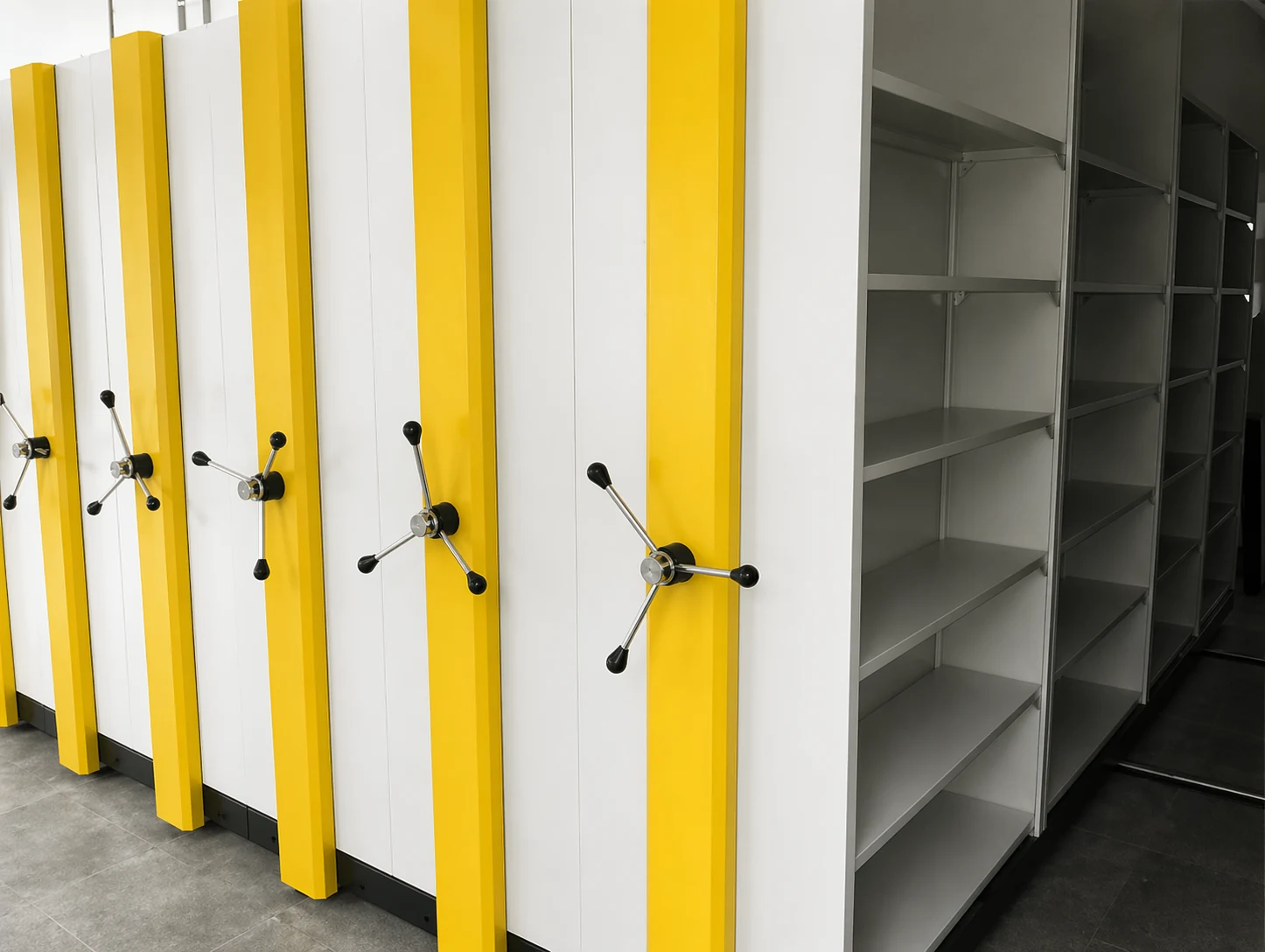
Shrusti Compactors is designed for office/records-room density. File or document shelves are grouped on mobile bases that compact together when not in use. One aisle is opened at a time for access, while the closed-block arrangement supports secure, organised storage. The system balances high storage density with every shelf position (one aisle open) and uses operator-managed stock flow. Selection starts with the confirmed load unit, inventory profile, available height, floor layout and handling method. Final structural ratings, dimensions and accessories are stated in the Shrusti quotation and approved layout.

How it works

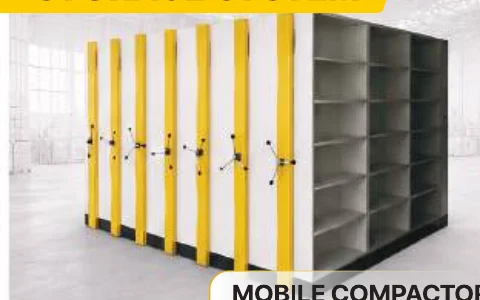
File or document shelves are grouped on mobile bases that compact together when not in use. One aisle is opened at a time for access, while the closed-block arrangement supports secure, organised storage.

Key features

  • Compact mobile filing blocks with one working aisle
  • Storage density: High
  • Storage access: Every shelf position (one aisle open)
  • Stock rotation: Operator-managed
  • Handling method: Manual (wheel/handle)
  • Load profile: Files, documents
  • Additional blocks or internal shelf modules may be introduced where the room and base layout allow.
  • Shelving or lockers on mobile bases sliding along rails, closing off all but one working aisle at a time — the same mechanism as Mobile Shelving
  • Applications list specifically includes offices and filing/document storage, suggesting an office/records-room positioning

Benefits

  • Space utilisation: High density for the documented inventory profile.
  • Accessibility: Every shelf position (one aisle open).
  • Inventory flow: Operator-managed.
  • Operational fit: Designed for office/records-room density.
  • Handling compatibility: Planned around manual (wheel/handle).
  • Expansion: Additional blocks or internal shelf modules may be introduced where the room and base layout allow.
  • Safety: Include controlled block movement, end stops, locks, stable bases, aisle clearance and safe access for the intended users.
  • Space utilization: Compact mobile-base design reduces the floor area needed for a given volume of filing or archive storage
  • Safety considerations: Locking lockers restrict access to authorised personnel.
  • Inventory control: Accessories support classification and organisation of archived or filed material

Technical specifications

Published configuration framework.

Only product information supported by the catalogue is shown. Final dimensions and structural ratings are stated in the approved quotation and layout.

Compactors technical specifications
Product familyShelving & Picking
Storage typeHigh-density mobile filing system
Load capacityProject-specific; final load capacity is stated in the approved structural layout.
Bay configurationCompact mobile filing blocks with one working aisle
Storage depthBlock and shelf depth are project-specific
Frame / structure heightProject-specific; final frame height follows the approved facility layout.
Beam / shelf / tier levelsShelf levels adjustable at 25 mm intervals.
Shelf-level adjustment25 mm intervals.
Bay widthSized to the confirmed load unit and handling method in the approved layout.
Bay depthDefined by the storage method and load geometry in the approved layout.
Shelf load capacityProject-specific; no fixed shelf-load figure is published.
Bay load capacityProject-specific; stated in the approved structural design.
Upright / structural sectionSelected to the confirmed load, height and bay arrangement in the structural design.
Material constructionSteel structural components are used; grade and section are confirmed in the technical offer.
Coating / finishFinish is selected in the quotation for the operating environment.
Storage accessibilityEvery shelf position (one aisle open)
Storage densityHigh
Stock rotationOperator-managed
Handling methodManual (wheel/handle)
Expansion capabilityAdditional blocks or internal shelf modules may be introduced where the room and base layout allow.
Safety provisionsInclude controlled block movement, end stops, locks, stable bases, aisle clearance and safe access for the intended users.
Suitable load unitsFiles, documents
Facility compatibilityOffice/records-room density
Customization optionsShelf levels at 25 mm intervals, dividers, drawers, doors, labels, locks, handles and file formats.

Applications and warehouse use cases

Match the system to the inventory and operating method.

Applications

  • Primary application: Office/records-room density.
  • Typical load profile: Files, documents.
  • Preferred handling method: Manual (wheel/handle).
  • Applications listed are broader than the Mobile Shelving page's list and specifically add 'Offices' and 'Filing & Document storage' alongside engineering stores, small parts warehousing, archives, and pharmaceuticals — suggesting the intended positioning for this page is office/records-room use, even though the on-page description does not yet reflect that focus.
  • Typical operational scenarios: Best treated, until further differentiation, as the office/filing-focused positioning of the same mobile-base shelving concept described under Mobile Shelving.
  • Industry applications: Corporate administration, government and institutional records management, and general document-heavy office environments.

Warehouse use cases

  • Facilities managing office/records-room density.
  • Layouts requiring every shelf position (one aisle open).
  • Operations using manual (wheel/handle).
  • Inventory flows based on operator-managed.

Industry suitability

Compactors industry suitability
ManufacturingApplication-dependentApplication-dependent; confirm the load unit, SKU profile, handling method and facility before selection.
AutomotiveApplication-dependentApplication-dependent; confirm the load unit, SKU profile, handling method and facility before selection.
EngineeringStrong fitStrong fit where the operation matches this system's documented load, access and inventory profile.
FMCGApplication-dependentApplication-dependent; confirm the load unit, SKU profile, handling method and facility before selection.
RetailApplication-dependentApplication-dependent; confirm the load unit, SKU profile, handling method and facility before selection.
E-CommerceApplication-dependentApplication-dependent; confirm the load unit, SKU profile, handling method and facility before selection.
PharmaceuticalsStrong fitStrong fit where the operation matches this system's documented load, access and inventory profile.
Food ProcessingApplication-dependentApplication-dependent; confirm the load unit, SKU profile, handling method and facility before selection.
TextilesApplication-dependentApplication-dependent; confirm the load unit, SKU profile, handling method and facility before selection.
ChemicalsApplication-dependentApplication-dependent; confirm the load unit, SKU profile, handling method and facility before selection.
Logistics & 3PLApplication-dependentApplication-dependent; confirm the load unit, SKU profile, handling method and facility before selection.
Cold StorageApplication-dependentApplication-dependent; confirm the load unit, SKU profile, handling method and facility before selection.
Industrial DistributionStrong fitStrong fit where the operation matches this system's documented load, access and inventory profile.

Safety, customisation and support

Define the interfaces before installation.

Safety benefits

  • Include controlled block movement, end stops, locks, stable bases, aisle clearance and safe access for the intended users.
  • Project-specific load ratings and clear operating limits are stated in the approved layout and handover documentation.
  • Installation planning should separate equipment routes, pedestrian access and service clearances where applicable.

Customization options

  • Shelf levels at 25 mm intervals
  • dividers
  • drawers
  • doors
  • labels
  • locks
  • handles and file formats.

Installation & support

  • Storage study and requirement capture
  • Layout and configuration development
  • Structural selection and project quotation
  • Supply and installation coordination
  • Handover, operator guidance and documentation
  • AMC, preventive maintenance and inspection support

Maintenance guidance

  • Inspect bases, wheels or rails, handles, locks, shelf supports and alignment; keep aisles and running paths clear.
  • Do not modify levels, bays, lanes or platforms beyond the approved configuration without engineering review.
  • Record impact damage, deformation or missing components and isolate affected positions until reviewed.

Buying guide

Choose from the operating requirement, not the product name.

  • Who should buy it: Operations with office/records-room density.
  • Inventory profile: Files, documents with operator-managed stock flow.
  • Access and density: Choose this system when every shelf position (one aisle open) and high density match the operating priority.
  • Handling equipment: Confirm compatibility with manual (wheel/handle) before fixing aisle, bay or lane dimensions.
  • Selection criterion: PRIORITY: resolve duplicate content vs Mobile Shelving.
  • Expansion: Review the five-year SKU, capacity and building-growth plan before finalising row lengths, levels or platform coverage.
  • Budget: Commercial pricing is project-specific and follows the approved layout, structural ratings, accessories and installation scope.
  • Until Shrusti confirms how this page should be differentiated from Mobile Shelving, buyers researching either 'compactor' or 'mobile shelving' terms should be treated as the same audience, and selection guidance should follow the Mobile Shelving entry in this product range.

Comparison table

Compare adjacent systems.

AttributeMobile ShelvingCompactorsRack Supported Mezzanines
Storage densityHighHighNot applicable
AccessibilityEvery shelf position (one aisle open)Every shelf position (one aisle open)Full platform access, plus racking below
Load capacityProject-specific quotationProject-specific quotationProject-specific quotation
Cost levelProject-specific quotationProject-specific quotationProject-specific quotation
FlexibilityAdditional blocks or shelving modules may be added where rail/base capacity and room dimensions permit.Additional blocks or internal shelf modules may be introduced where the room and base layout allow.The supported rack block and deck can be extended after verifying structural continuity, access and load distribution.
Best use caseArchives, documents, small parts, space-constrainedOffice/records-room densityEconomical second level using existing racking as support
Warehouse typeMobile archive and small-parts shelvingHigh-density mobile filing systemRack-supported elevated storage platform
Ideal industryCorporate records management, publishing, pharmaceuticals, and general spare-parts warehousingCorporate administration, government and institutional records management, and general document-heavy office environmentsWarehousing, distribution, and any storage-intensive operation already using or planning to install substantial racking or shelving

Product FAQs

Questions buyers ask before a storage quotation.

What is a mobile compactor storage system?

It is a compact storage system where shelving or lockers sit on mobile bases that slide along rails, closing off all but one working aisle at a time to save floor space — used for filing, records, and document storage.

Is a compactor the same as mobile shelving?

On Shrusti's current site, Compactors and Mobile Shelving describe the same underlying product with almost identical content; buyers should treat the two as equivalent until Shrusti confirms a specific distinction.

What is a compactor system best used for?

The applications list for this page specifically includes offices and filing/document storage, alongside archives, engineering stores, small parts warehousing, and pharmaceuticals.

Can compactor units be locked?

Yes — locking lockers are available to restrict access to authorised personnel.

How much space does a compactor system save?

The same space-saving description as Mobile Shelving applies: storage can be doubled, or the required footprint reduced, compared with static shelving.

Should I search for 'compactor' or 'mobile shelving' for my project?

Either term currently leads to the same underlying Shrusti product; Shrusti is recommended to consolidate these into a single page to avoid confusion (see this product range's differentiation guidance).

What is Compactors?

Compactors is a high-density mobile filing system system. File or document shelves are grouped on mobile bases that compact together when not in use. One aisle is opened at a time for access, while the closed-block arrangement supports secure, organised storage.

What inventory profile suits Compactors?

It is best suited to office/records-room density, using files, documents.

What storage density does Compactors provide?

The catalogue classifies its storage density as high. Actual capacity depends on the approved layout and load profile.

How accessible are stored goods in Compactors?

Storage access is described as every shelf position (one aisle open).

What handling equipment is used with Compactors?

The documented handling method is manual (wheel/handle). The exact equipment envelope must be checked before the aisle or bay layout is approved.

What stock-rotation method does Compactors support?

The documented stock-rotation approach is operator-managed.

Universal Shrusti FAQ block

Where is Shrusti based?

Shrusti is based in Chennai, Tamil Nadu, India, and has more than four decades of material-handling and storage-system experience.

Does Shrusti design and install racking systems?

Yes. The project scope can cover requirement study, layout, system selection, supply, installation, handover and ongoing support.

Can a racking layout be customised?

Yes. Bay dimensions, levels, row lengths, access routes, storage method and accessories are selected around the confirmed load, inventory profile and facility.

Is AMC and inspection support available?

AMC, preventive maintenance and rack-inspection support can be included in the commercial scope for the installed system.

What should I share for a quotation?

Share the facility layout, clear height, load dimensions and weight, SKU and pallet profile, required storage capacity, handling equipment and target project timeline.

What is Compactors, and when should a warehouse use it?

Mobile compactors mount shelving or lockers on sliding mobile bases, closing off all but one working aisle to compact floor space used for filing, records, and document storage. Shrusti markets this under both 'Compactors' and 'Mobile Shelving,' and the two products are, on the current site, described almost identically. Offices and records rooms are named applications, alongside the broader archive and small-parts uses shared with Mobile Shelving. Buyers comparing the two should treat them as the same underlying system until Shrusti confirms a specific distinction.

Who should choose Compactors?

Choose Compactors when the operation has office/records-room density and needs every shelf position (one aisle open) with high storage density.

How is Compactors selected?

Selection begins with the load unit, SKU profile, required positions, building envelope and manual (wheel/handle). Final dimensions and ratings follow the approved layout.

Is Compactors a fixed online configuration?

No. Compactors is a quote-led storage system configured around the facility, load and operating method.

Why choose Shrusti

One accountable path from requirement to operation.

Shrusti has engineered material handling and storage systems from Chennai since 1985. Each racking project starts with the load unit, SKU profile, facility envelope, handling equipment and operating flow, then moves through layout development, structural selection, supply, installation and handover. Customers can also scope site study, commissioning, operator guidance, AMC and lifecycle support through one accountable team.

Request quote

Turn the storage requirement into an approved layout and quotation.

Call UsGet Quote
Call UsGet QuoteProducts